
Comply with ZDNET: Add us as a most well-liked supply on Google.
ZDNET’s key takeaways
- iPhone storage at all times fills up quicker than most individuals anticipate.
- You possibly can reclaim area with out deleting all the pieces you like.
- Shopping for extra iCloud+ storage is non-obligatory, however not essential.
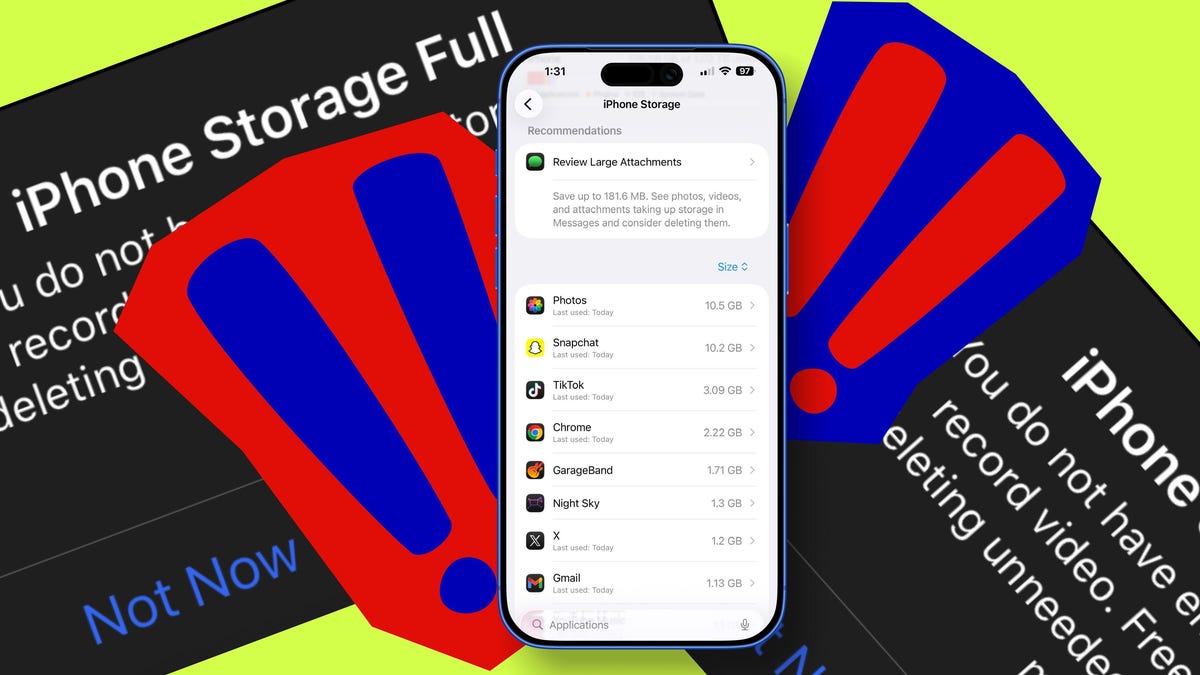
In case you’ve ever seen the dreaded “iPhone Storage Full” warning, you are not alone. Storage can replenish quick because of the photographs and movies we seize, the apps we obtain, and the browser cache and system information that we let quietly pile up over time.
And whereas Apple would love so that you can remedy the issue by upgrading your iCloud+ plan, that is not your solely choice. There are many built-in iOS 26 instruments that may assist reclaim storage, and most of them are utterly free to make use of. Listed here are those I typically strive first.
1. Examine your system information
Earlier than you delete something, it helps to determine the place your storage goes. System Information can quietly balloon to gigabytes with out you realizing it, however it’s largely made up of caches and short-term information that iOS manages by itself.
How you can verify system information in your iPhone
- Open Settings.
- Faucet Common.
- Faucet iPhone Storage.
- Search for System Information on the backside of the listing.
- In case you see a excessive gigabyte quantity, strive closing all of your apps and restarting your cellphone.
System Information fluctuates consistently. I’ve seen it soar to 30GB after which drop by 10GB in a single day with out me touching a factor. Sadly, you may’t manually clear it, however closing unused apps and restarting your cellphone can typically assist shrink that quantity. For instance, once I checked simply now, it was 17GB. I closed my apps, restarted my cellphone, and now it is at 12GB.
Hey, that is 5GB saved!
2. Offload (or delete) unused apps
This is without doubt one of the most underrated storage options on the iPhone. That is as a result of offloading an app removes it out of your gadget with out deleting your paperwork, information, or logins. These are stored protected in iCloud. Once you reinstall the app later, all the pieces comes again precisely as you left it. Nonetheless, offloading an app you hardly ever use removes the big app file itself and frees up area.
How you can offload unused apps in your iPhone
- Go to Settings > Common > iPhone Storage.
- Scroll to search out massive apps you hardly ever use. Faucet an app taking over a whole lot of area.
- Choose Offload App. Or choose Delete App if you happen to want.
- Affirm.
I did this for a number of apps simply now, akin to GarageBand, which was taking over greater than 1GB of area. You can even delete apps, however that removes the app and all its information completely. It does unencumber extra space and allows you to begin contemporary if you happen to resolve to reinstall later. I recommend utilizing offloading if you happen to would possibly use the apps once more quickly and deleting if you happen to’re utterly accomplished with the apps.
3. Clear your iPhone cache
I’ve a separate information on this subject, however the TL;DR is that this: in case your iPhone feels gradual or low on storage, clearing its cache will help.
Over time, apps retailer short-term information meant to hurry issues up, however an excessive amount of cached information can have the alternative impact. Sadly, there isn’t any “clear cache” button in iOS. Some apps provide built-in cache choices, nevertheless, together with browsers like Safari and Chrome and apps like Snapchat. Clearing cache can unencumber area, enhance efficiency, and scale back glitches.
How you can clear cache in your iPhone
- Clear Safari cache: Go to Settings > Apps > Safari > Web site Information > Take away All Web site Information, then faucet Take away Now.
- Clear Chrome cache: Open Chrome, faucet the three dots, then go to Settings > Privateness and Safety > Delete Looking Information. Underneath Looking Information, choose Looking Historical past and Cached Pictures and Recordsdata. You’ll want to specify a time vary.
- Clear app cache: Search for different apps that supply a transparent cache choice. For instance, in Snapchat, go to Profile > Settings > My Privateness and Information > Clear Information > Clear Cache > Clear.
- Restart your iPhone: Energy your cellphone off and again on to flush short-term system information and refresh efficiency.
Doing this routine repeatedly will help hold your iPhone operating easily.
4. Delete junk photographs and movies
I will be trustworthy, photographs and movies are your greatest storage hogs. Burst photographs, screenshots, display recordings, memes, downloaded TikToks and saved Snapchats, and, after all, duplicates all add up quick, particularly if you happen to want high-resolution photographs and take 4K video. It does not damage to look by way of your Images app from time to time and delete the stuff you do not want.
How you can delete photographs and movies in your iPhone
- Open the Images app and go to Collections.
- Scroll to Media Sorts, akin to Bursts, Screenshots, or Display Recordings. Choose a class, faucet Choose, evaluate what you don’t need, and faucet the Trash icon. You possibly can delete gadgets individually or in batches.
- Again in Collections, scroll to Utilities. Choose a class akin to Duplicates or Illustrations, after which repeat the identical course of.
- Once you’re accomplished, go to Collections > Utilities > Lately Deleted. Authenticate to entry the folder, after which completely delete the gadgets you simply purged to immediately unencumber area.
In order for you a extra low-effort approach to manage an overloaded digicam roll with out spending hours deleting, use your cellphone’s built-in picture search to lookup right now’s date. This surfaces photographs taken on that day throughout previous years.
You possibly can then shortly evaluate that small batch and delete something that does not matter. Repeating the method every day permits you to steadily declutter over time and turns an amazing activity into a fast, manageable behavior.
5. Optimize picture storage
Even when you’ve got the free iCloud+ tier, Apple features a built-in function that may scale back how a lot area photographs and movies take up. When enabled, your full-resolution photographs and movies are saved in iCloud, whereas smaller variations stay in your cellphone. You possibly can nonetheless view all the pieces usually, and your iPhone mechanically downloads the full-quality model while you want it.
How you can allow optimize picture storage in your iPhone
- Go to Settings > Apps.
- Faucet Images.
- Activate iCloud Images.
- Choose Optimize iPhone Storage.
Simply do not forget that this does take up iCloud storage, so if you happen to’re low on area, it’s possible you’ll be compelled to improve your plan.
6. Switch information off your iPhone
If cloud storage is not your factor, or you do not need to pay to improve your plan, strive shifting information off your iPhone.
How you can switch information off your iPhone
- Use AirDrop to maneuver photographs and movies to your Mac: Open the Images app in your iPhone > choose the photographs or movies you need to transfer > faucet the Share button > select AirDrop > choose your Mac > settle for the switch in your Mac.
- You possibly can copy information to an exterior USB or Lightning drive: Open the Recordsdata app in your iPhone > find the information you need to transfer > faucet and maintain a file, then select Transfer > choose your exterior drive > faucet Transfer to substantiate.
The thought right here is you are transferring massive information to a pc or exterior storage for archiving. When you verify the information are backed up elsewhere, delete them out of your iPhone to right away unencumber cupboard space.
7. Overview massive attachments
Reviewing massive attachments in Messages helps you shortly discover and take away photographs, movies, GIFs, and different information which were shared in textual content threads and are quietly taking over area in your iPhone. These attachments can pile up over time, particularly in energetic group chats, they usually’re straightforward to overlook as a result of they dwell inside conversations moderately than your Images app.
How you can evaluate massive attachments in your iPhone
- Open Settings.
- Faucet Common.
- Faucet iPhone Storage.
- Scroll down and faucet Overview Giant Attachments.
- Overview the listing, choose the gadgets you need to take away, and delete them to unencumber area.
The Overview Giant Attachments view pulls all the pieces into one place, sorted by measurement, so you may see what’s consuming up storage at a look and delete gadgets you now not want with out digging by way of particular person message threads.
8. Sorry, however purchase extra iCloud+ area
Generally the one resolution left, if you happen to really want extra storage, is to improve your plan. That is very true if photographs and movies are your primary problem and you do not need to delete something. Selecting a brand new iCloud+ plan does not improve your cellphone’s bodily storage, however paired with optimization settings, it could actually improve your usable area.
How you can improve iCloud+ plans in your iPhone
- Open Settings.
- Faucet your identify.
- Faucet iCloud.
- Faucet Storage > Change Storage Plan > See All Plans.
- Select a storage tier and make sure.
iCloud+ begins at 99 cents a month for the 50GB plan. There’s additionally 200GB for $2.99, 2TB for $9.99, 6TB for $29.99, and 12TB for $59.99. I’ve 2TB and am at present utilizing a few quarter of it, with photographs saved in iCloud taking over roughly 10% of the area.

